

As cryptocurrencies become a serious part of personal and institutional wealth, one thing is clear: how you store your crypto matters just as much as what you invest in. Online wallets and exchanges may feel convenient, but they also come with risks that many users learn about the hard way.
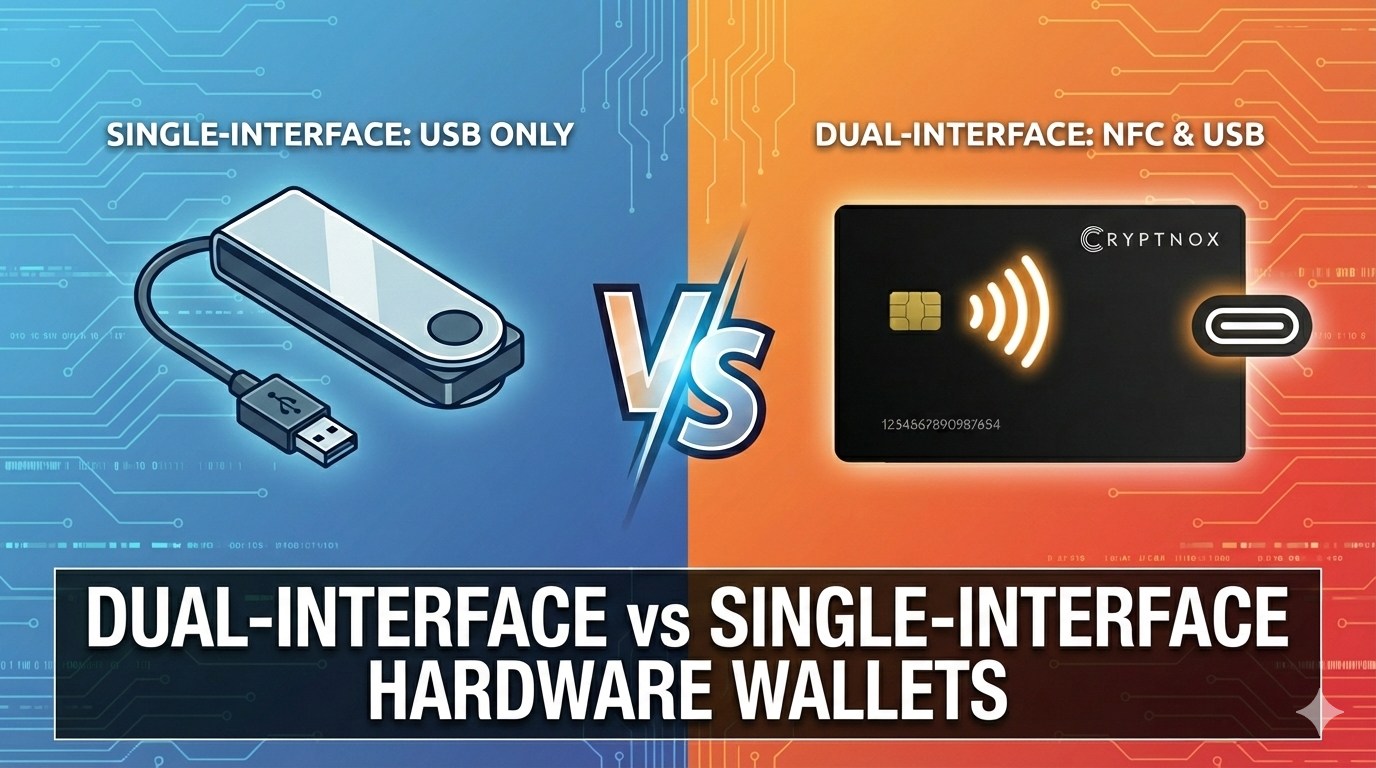
That’s why more investors are turning to a hardware wallet—a secure, offline device designed to protect private keys from hacks, malware, and phishing attacks. But once you decide to use a crypto hardware wallet, you’re faced with another important choice: single-interface vs dual-interface hardware wallets.
So which one is better? The answer depends on how you use crypto, how often you transact, and what level of flexibility you expect. Let’s break it down in a simple, human way.
What Is a Hardware Wallet?
A hardware wallet is a physical device that stores your private keys offline, keeping them isolated from internet-connected threats. Unlike software wallets, private keys never leave the device—even when you make transactions.
In short:
- Your crypto stays secure even if your computer or phone is compromised
- You remain in full control of your digital assets
- Security does not rely on third-party platforms
This makes a crypto hardware wallet one of the safest options for long-term holders, active traders, and institutions alike.
Understanding Wallet Interfaces
The “interface” of a hardware wallet refers to how the device connects and communicates with other systems like computers, smartphones, or payment terminals.
Single-Interface Hardware Wallet
A single-interface hardware wallet connects through one communication method, most commonly:
- USB only
- NFC only
- Bluetooth only
Dual-Interface Hardware Wallet
A dual-interface hardware wallet supports two connection methods, usually:
- USB + NFC
- USB + Bluetooth
This difference may sound technical, but in real-world use, it directly affects convenience, flexibility, and use cases.
Single-Interface Hardware Wallets: Simple and Secure
Single-interface wallets are often the first choice for users who value simplicity and minimalism.
Key Advantages
- Straightforward security model – fewer communication channels mean fewer potential attack surfaces
- Easy to use – ideal for beginners who don’t want extra features
- Lower power consumption – fewer components involved
- Cost-effective – usually more affordable than dual-interface options
Limitations
- Requires a specific device (e.g., a laptop with USB)
- Less convenient for mobile-first users
- Limited flexibility for real-world crypto payments
Best For:
- Long-term crypto holders
- Users who transact infrequently
- Those who prioritize maximum simplicity
If you mainly store assets and only make occasional transfers, a single-interface hardware wallet does the job extremely well.
Dual-Interface Hardware Wallets: Flexibility Meets Security
Dual-interface wallets are designed for modern crypto users who want strong security without sacrificing convenience.
Key Advantages
- Multiple connection options – use USB at home and NFC or Bluetooth on the go
- Mobile-friendly – seamless interaction with smartphones and tablets
- Faster transactions – especially for NFC-based payments
- Future-ready – adaptable to evolving crypto ecosystems
Many premium wallets, including those designed by Cryptnox, focus on dual-interface technology to meet the needs of everyday crypto usage without compromising security.
Limitations
- Slightly higher cost
- More advanced features may feel overwhelming to beginners
Best For:
- Active traders
- Mobile-first crypto users
- Crypto payments and daily transactions
- Users who want flexibility across devices
Security: Is Dual-Interface Less Safe?
A common misconception is that dual-interface wallets are less secure. In reality, security depends on implementation, not the number of interfaces.
High-quality crypto hardware wallets:
- Use secure elements (bank-grade chips)
- Require physical confirmation for transactions
- Keep private keys fully isolated
- Follow strict security certifications
When built properly, a dual-interface hardware wallet offers the same level of protection as a single-interface one—while delivering greater usability.
Real-World Use Case Comparison
Scenario
Single-Interface
Dual-Interface
Long-term holding
✅ Excellent
✅ Excellent
Mobile transactions
❌ Limited
✅ Seamless
Daily crypto payments
❌ Not ideal
✅ Perfect
Beginner-friendly
✅ Yes
⚠️ Moderate
Future-proof design
❌ Basic
✅ Strong
Which One Should You Choose?
Ask yourself these questions:
- Do you mostly hold or transact frequently?
- Do you use crypto on your phone, desktop, or both?
- Do you value convenience, mobility, or simplicity more?
Choose a Single-Interface Hardware Wallet if:
- You are a long-term holder
- You prefer minimal features
- You mainly use desktop devices
Choose a Dual-Interface Hardware Wallet if:
- You use crypto regularly
- You want mobile access and payment options
- You expect your wallet to adapt as crypto evolves
Final Thoughts
There’s no universal “better” option—only what’s better for your lifestyle. A single-interface hardware wallet delivers clean, dependable security. A dual-interface crypto hardware wallet adds flexibility, speed, and modern usability without sacrificing protection.
As crypto adoption grows beyond storage into payments, identity, and daily transactions, dual-interface wallets are increasingly becoming the preferred choice for forward-thinking users.
Whichever you choose, investing in a trusted hardware wallet is one of the smartest decisions you can make in your crypto journey—because true ownership starts with true security.
