

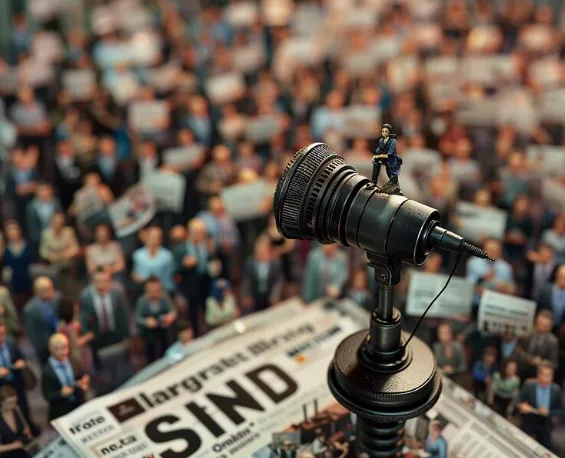
In today’s fast-moving digital world, people are exposed to more political information than ever before. News updates appear on social media feeds, mobile apps, websites, podcasts, and video platforms throughout the day. While this constant flow of information helps people stay informed, it can also make it difficult to evaluate issues objectively.
Many individuals naturally gravitate toward sources that reflect their existing beliefs. Although this is a common human tendency, it can limit exposure to alternative viewpoints and reduce opportunities for deeper understanding. This is why access to Balanced Political News has become increasingly important.
When readers encounter information that presents multiple sides of an issue fairly, they are better equipped to engage in meaningful Political Perspective Comparison, leading to more informed opinions and stronger critical-thinking skills.
Why Diverse Perspectives Matter
Political issues are often complex. Topics such as healthcare, education, taxation, immigration, and economic policy rarely have simple solutions. Different groups may support or oppose the same proposal for entirely different reasons.
When people consume information from only one perspective, they may miss important context that helps explain opposing viewpoints.
Exposure to multiple perspectives can help readers:
-
Understand the reasoning behind different opinions
-
Identify areas of agreement and disagreement
-
Recognize the complexity of public policy decisions
-
Avoid oversimplifying important issues
Access to Balanced Political News encourages readers to move beyond partisan narratives and consider a broader range of information before forming conclusions.
The Challenge of Information Bubbles
Digital technology has transformed how people discover and consume news. Algorithms often recommend content based on previous interests, search behavior, and online interactions.
While personalization can improve convenience, it may also create information bubbles where users repeatedly encounter similar viewpoints.
Over time, this can reduce opportunities to engage with different ideas and perspectives.
As a result, people may become less aware of alternative interpretations of political events and public debates.
A stronger focus on Political Perspective Comparison helps address this challenge by encouraging readers to seek information from multiple sources rather than relying on a single narrative.
What Makes Political News Balanced?
Balanced reporting does not require every article to present identical opinions. Instead, it involves providing fair context, accurate information, and reasonable representation of different viewpoints.
Characteristics often associated with Balanced Political News include:
Multiple Sources
Articles include information from more than one perspective, allowing readers to understand differing viewpoints.
Context and Evidence
Facts, data, and relevant background information support claims.
Neutral Language
Reporting avoids unnecessary emotional language that may influence reader perception.
Transparency
Sources and supporting evidence are clearly identified whenever possible.
These practices help readers evaluate issues based on information rather than assumptions.
The Value of Political Perspective Comparison
One of the most important skills in modern media consumption is the ability to compare viewpoints thoughtfully.
Political Perspective Comparison is not about choosing one side over another. Instead, it involves examining how different groups interpret the same issue and understanding why those differences exist.
For example, two commentators may agree that a problem exists but disagree on how it should be solved. By comparing their perspectives, readers gain a more complete understanding of the debate.
This process encourages:
-
Critical thinking
-
Independent analysis
-
Stronger decision-making
-
More productive discussions
Rather than reinforcing existing beliefs, comparison helps people evaluate ideas on their merits.
How Balanced News Supports Civil Discourse
Public discussions often become polarized when individuals only encounter viewpoints that match their own beliefs.
Exposure to Balanced Political News can help create a healthier environment for conversation by encouraging empathy and understanding.
When people understand why others hold different opinions, disagreements become more constructive. Discussions can focus on evidence, policy outcomes, and practical solutions rather than personal attacks.
This does not mean everyone will reach the same conclusions. Instead, it promotes more respectful and informed dialogue.
In democratic societies, the ability to discuss issues openly and thoughtfully remains an important part of civic participation.
Developing Better News Habits
Readers can strengthen their understanding of current events by adopting a few simple habits:
-
Read from multiple reputable sources
-
Compare different viewpoints on major issues
-
Look for supporting evidence and context
-
Distinguish between reporting and opinion content
-
Remain open to new information
These practices make Political Perspective Comparison more effective and help readers build a broader understanding of important topics.
The goal is not to avoid disagreement but to make decisions based on a more complete picture of available information.
Final Thoughts
In an era of constant information and increasing political polarization, developing strong media habits is more important than ever. Exposure to Balanced Political News helps readers understand complex issues from multiple angles, while Political Perspective Comparison encourages thoughtful evaluation of competing viewpoints.
Together, these approaches support critical thinking, informed decision-making, and more constructive public discussions. By seeking diverse perspectives and evaluating information carefully, readers can become more confident and informed participants in today’s rapidly evolving media landscape.
